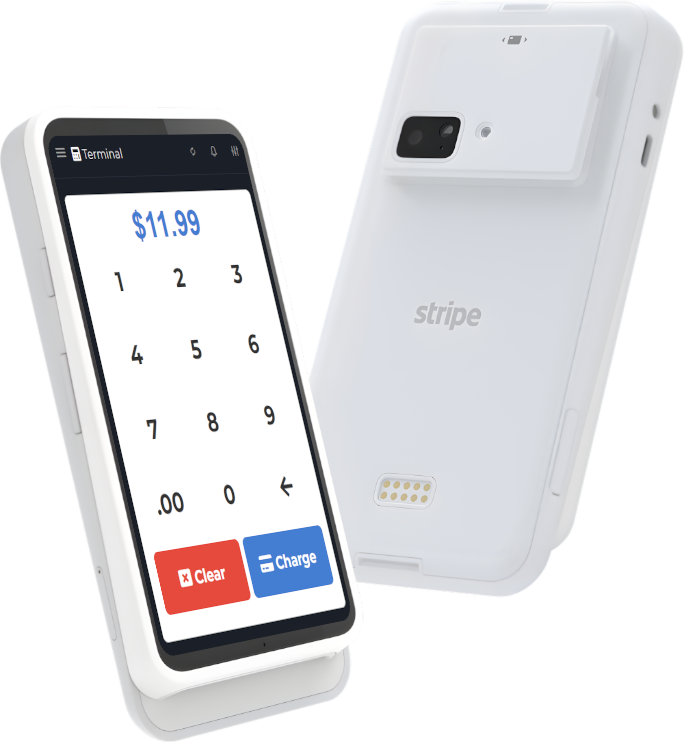


Simplify your store tech stack with one POS workflow that makes checkouts faster and staff training easier.
If your checkout tools feel like a toolbox with too many moving parts, you are not alone. Many small teams start with one app for in-store sales, another for pickup tracking, and a third for reporting. Then one day someone asks where today's pickup orders are, another person cannot find payment status, and the team lead says, "let me just open four tabs and pray." We can do better. In this guide, we will design a cleaner path, using one POS workflow as your operating spine instead of a stack of disconnected apps.
This is not about shiny tech first. It is about reducing friction. When a process is simple, your team does less searching and more selling. When your team does less searching, errors drop. When errors drop, your margin gets a little less leaky. You do not need enterprise scale to gain that. You need clarity and a fair system.
Why stores drift into app sprawl
Most small stores do not wake up and say, "let us add one more app today." App sprawl usually sneaks in like this:
- A new sales channel opens.
- Someone copies a manual process into a spreadsheet.
- A supplier ships new features and you add another dashboard to get alerts.
- Team members need one view for checkout and another for stock.
Each step feels practical in the moment. The problem is the stack grows with no clear ruler for what to keep. A small team usually feels the pain at shift handoffs. If no one can quickly explain where today's status lives, the team starts guessing, and guesswork is expensive.
What a unified POS stack should do first
For now, ignore advanced add-ons and test your foundation against four goals.
- Single place for daily sales and returns.
- Clear checkout path with minimal screen changes.
- Inventory changes that update quickly when an item sells.
- A basic report that everyone trusts before noon.
If your stack does not satisfy these four goals, it is not a unified system yet. It is a patchwork.
In practical terms, this means making a small promise to your team: one source of truth for order status, stock, and payments. It is tempting to keep backup tools "just in case," but if backup tools are used in daily workflows, they become the system and the main tool becomes decoration.
A light migration plan with little drama
Use this three-week path. It is intentionally boring. Boring here is good.
Week one: map all current tools and label where each action enters and exits. For example, where do pickup orders begin, where do they get paid, who confirms completion, and who checks stock? Draw two columns: must happen daily and nice to have. If a tool only supports the second column, it can wait.
Week two: move only the highest impact channel into one flow. If pickup is your busiest growth area, start there. If curbside and in-store returns cause the most complaints, start there. Set up your team in one queue and run both flows through a single dashboard. Expect the odd missing data field. Resolve those in place as you go.
Week three: connect reporting at the same pace as sales. Your goal is not dozens of reports. Your goal is one daily snapshot that answers three questions: What sold, what is low, what needs attention before close. If those answers are visible without opening four places, you are ready to remove one or two old tools.
How to avoid the "new app addiction" cycle
Most teams add apps because they solve one pain quickly. That is a normal impulse. You can respect that impulse and still keep control with a simple rule: every new tool needs a deprecation decision on day one.
When you add something, ask two questions:
- What exact task is this replacing?
- Who can no longer use it after 30 days because the POS flow now covers it?
If you cannot answer both, you are just adding noise.
A small team loves one app not because it is perfect, but because everyone can teach it to the next teammate. Hiring becomes easier, training takes less time, and new employees stop inheriting the same old confusion.
Simple daily habits to keep everything aligned
Here is a 10-minute morning ritual many small teams use after unifying around one core workflow:
- Open the order list and mark any status that feels wrong.
- Run one quick low-stock check.
- Review payment terminal connectivity before first open.
- Confirm who is on the floor and who handles returns.
- Send one team note with the day's top five priorities.
That is it. No dashboards with 30 tabs. No mystery.
Why this connects to M&M POS
M&M POS is useful when your team needs one place to run the daily engine: sales, receipts, payments, and inventory checks. You can use the software in the way it is designed, then add deeper controls only if they support a real workflow problem. If you want a practical starting point, try the core flow first and then explore advanced options gradually. This keeps your momentum steady instead of turning your team into accidental testers.
Need a concrete next step right now? download M&M POS, install the base modules you already use, and run a short two-hour mock day. Keep notes on where people had to click around. At the end of the week, you will usually remove at least one old tool or process, even before touching hardware or pricing.
And yes, you will still have a few paper notes, a sticky note system, or both. But with one POS path, those notes support operations, not compensate for chaos.
How to keep growth focused
Growth for a small team is not measured by how many new tabs you open. It is measured by how many less confusing moments your team survives on a normal day. Keep the stack lean, then add one upgrade at a time. Your team will adopt better habits when each change fixes a real pain they can see.
Here is a practical check for the next two weeks: if a process takes less than two screens per order for one quarter of your staff, keep it. If it takes more than two screens and creates more than one confusion question per hour, simplify it first. That simple filter gives your team a voice without asking for process theory.
Do not try to migrate everything during one update window. You will lose training energy. Move one channel, run it for one full week, then move only if the team can explain it without notes. This protects your team and protects your margin from avoidable mistakes.
Small stores often think simplification means sacrifice. In reality, it often means you stop maintaining four ways to do the same task and start doing one way consistently. The difference shows up in calmer shifts, fewer corrections, and faster guest checkouts.