

Hiring is hard and training is harder. This practical 7-day onboarding plan uses your POS as the training backbone: tiny daily goals, mistake-proof register screens, scripts for awkward moments, and end-of-shift reviews that turn new hires into confident operators.
Most small businesses do not have a training problem. They have a training system problem.
When staffing feels fragile, it is tempting to blame the labor market. But a lot of the "associate gap" comes from something more controllable: new hires are expected to learn a complicated register workflow by watching someone for 20 minutes and then being thrown into a rush.
That is not training. That is improvisation.
The good news: you do not need a corporate training department to fix it. You need a 7-day plan with tiny daily goals, and you need your POS to be the consistent backbone of the plan.
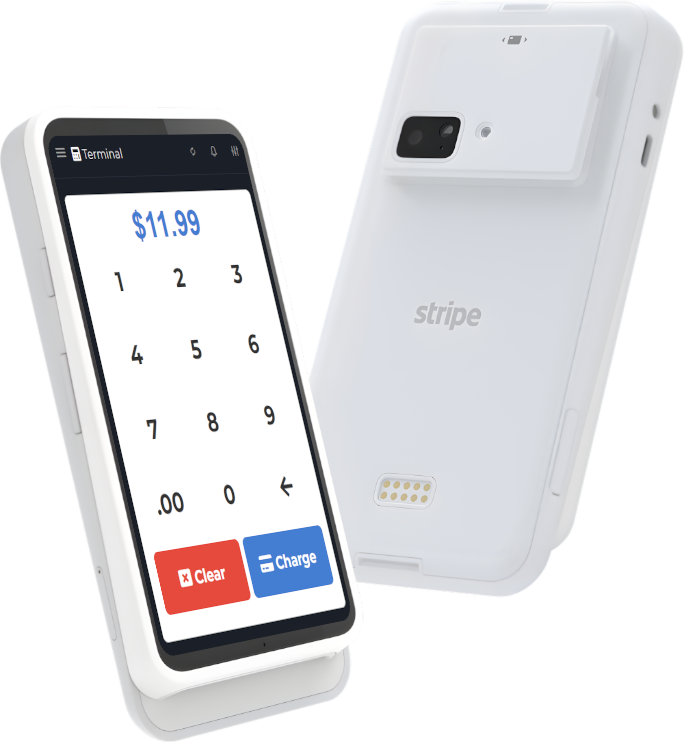
If you are building a cleaner, more repeatable checkout environment, start with a POS setup that is fast and predictable. M&M POS is designed for practical day-to-day operations, and you can download M&M POS to set up a practice register for training flows before a new hire ever touches a real customer line.
The mindset: train for decisions, not buttons
New employees do not fail because they cannot find a button. They fail because they cannot decide what to do when something is not standard:
- A customer changes their mind after you already rang the item.
- A price tag is missing.
- A refund request feels sketchy.
- The kitchen is out of an ingredient.
- A coupon is unclear.
Your training plan should teach the decision tree and the script, then the buttons become easy.
The 7-day onboarding plan (practical and repeatable)
This plan assumes a new hire is working at least a few shifts in their first week. Adjust the pacing to your schedule, but keep the structure.
Day 1: Tour + why we do things this way
Goal: the new hire understands the flow of the business.
- Walk the customer journey: entry, ordering, fulfillment, pickup, exit.
- Show the money journey: sale, receipt, drawer, close-out.
- Teach one rule: if you are unsure, pause and ask. Speed without accuracy is not speed.
POS exercise: ring a mock transaction and print a practice receipt. Let them do it twice.
Day 2: The standard sale (90% of transactions)
Goal: the new hire can complete normal transactions smoothly.
- Find items quickly (categories and search).
- Add common modifiers or options.
- Handle split tender (part cash, part card) if your store uses it.
POS exercise: 20 reps. Yes, 20. Repetition builds speed.
Day 3: The first set of "awkward moments"
Goal: the new hire learns scripts for common edge cases.
- Customer changes mind: void with the correct reason.
- Item is unavailable: suggest the closest substitute.
- Coupon confusion: escalate to manager instead of negotiating at the counter.
POS exercise: role-play 10 awkward scenarios. Keep it light. The objective is calm confidence.
Day 4: Discounts, comps, and approvals (control without drama)
Goal: the new hire learns that discounts are a process, not a personal favor.
- Use reason codes consistently.
- Know the approval threshold (when to call a supervisor).
- Use the script: "I can do that - I just need to select a reason."
POS exercise: ring 10 discounted transactions using different reason codes.
Day 5: Returns and refunds (where risk hides)
Goal: the new hire follows policy and does not improvise refunds.
- Require receipt or other proof per your policy.
- Follow the refund method rules (original payment vs store credit).
- Know when to escalate.
POS exercise: do 5 mock refunds and 5 exchanges. Talk through why you do it that way.
Day 6: Speed under pressure (without cutting corners)
Goal: the new hire can work a rush without melting down.
- Teach the "next action" mindset: keep the line moving by always knowing the next step.
- Teach how to ask for help quickly (not silently struggle).
- Teach where mistakes happen under stress (wrong item, wrong size, missing modifier).
POS exercise: timed drills: ring 10 transactions accurately, then review errors. Accuracy first, speed second.
Day 7: Close-out basics + confidence check
Goal: the new hire understands how their actions show up in the numbers.
- Explain how voids/discounts/refunds affect reporting.
- Show a simple daily report and what management looks at.
- Ask the new hire what still feels confusing and fix it now.
POS exercise: do a mock end-of-shift routine (even if they will not close yet): cash count concept, receipts, and how to flag issues.
Two tools that make training dramatically easier
Tool 1: A practice register environment
Training on live transactions is expensive: it costs speed, customer experience, and manager attention. A practice environment lets you train with reps. Even a short daily practice session changes outcomes.
Tool 2: A one-page cheat sheet at the register
Put the decision tree in reach. Your cheat sheet should include:
- How to handle a void
- When to call a manager
- Refund rules
- The three scripts for awkward moments
This is not coddling. This is system design.
How to know training is working (simple metrics)
You do not need to track 50 KPIs. Pick a few signals:
- Transaction time (only after accuracy is stable)
- Number of voids per shift for new hires
- Number of manager overrides requested
- Customer complaint rate during new hire shifts
When the numbers improve, training is not a "soft" topic anymore. It is profit.
Use M&M POS as the backbone of a repeatable training system
The best training systems are built on consistency: consistent register screens, consistent workflows, consistent reporting. That is why your POS choice matters more than most owners think.
If you want to build a 7-day onboarding plan that turns new hires into confident operators, start with a clean POS setup and a practice environment. You can explore M&M POS and download M&M POS to create a training-ready register flow and remove the chaos that makes training feel impossible.
Hiring is hard. Training does not have to be.