

Before you buy another tool or "add AI," fix your inputs: item names, modifiers, counts, close-out habits, and procedures. Learn a practical approach to make your operation predictable, then automate safely with clean POS data.
A trend we keep seeing is not "AI will do everything." The real trend is something more subtle and more useful: leaders are re-learning process basics. When markets tighten, everyone cares about throughput, waste, and predictable execution.
At the same time, AI tools are everywhere, and the sales pitch is almost always the same: "This will make you faster."
Here is the hard truth we have learned building software and watching small businesses run: AI does not fix messy operations. If your inputs are inconsistent, your outputs will be inconsistent. AI can sometimes generate a nice-looking answer faster, but it cannot create the missing ground truth that your operation needs.
The good news is: you do not need a big re-org to get better. You need a predictable-inputs strategy. In manufacturing and lean thinking, this is the idea that bottlenecks need high-quality inputs. In small business reality, it means: stop making your team guess.
What "predictable inputs" means in a small business
Predictable inputs are the things your team touches every day that should not be ambiguous:
- Item names and SKUs that match what is on the shelf
- Modifiers that represent real options (not a random list of synonyms)
- Inventory counts that are believable
- Close-out routines that happen the same way every day
- Refund and comp rules that staff can apply consistently
- Prep lists and reorder points that are written down (not in someone's head)
Once those inputs are stable, automation becomes safe. Until then, automation mostly accelerates confusion.
A fast diagnostic: where does your team lose time?
If you want to improve throughput, do not start by asking "what takes the longest?" Start by asking "where does uncertainty enter the system?"
Here are a few examples we hear constantly:
- "I do not know if we have enough of this to sell it."
- "I cannot find the right button, so I ring it up as something else."
- "We did not notice we were low until the rush."
- "The close-out is different depending on who is working."
- "Refunds are handled case-by-case, so customers argue."
All of those are input-quality problems.
The POS data principle: pick one source of truth
Small businesses often have "data" spread across receipts, paper notes, spreadsheets, text messages, and someone's memory. That is normal at first, but it breaks at scale.
Our recommendation is simple: pick one source of truth for sales and product structure. In most cases, that should be your POS. If your POS is messy, fix it. Do not build automation on top of a mess.
A practical 4-step improvement loop (no buzzwords)
Step 1: Clean the catalog until it feels boring
Pick the top 30-50 items that represent most of your sales. Make them clean: consistent names, prices, categories, and modifiers. Remove duplicate buttons that exist "because someone made a new one" during a rush.
Step 2: Make inventory countable (even if you do not track every item)
You do not need perfect inventory to get value. You need inventory you can trust for the items that cause pain. Start with your top sellers and your highest-cost items.
Step 3: Standardize close-out
Close-out is where your operation becomes "real." If close-out is sloppy, everything downstream is guesswork: cash management, tax prep, purchasing, and profit.
Step 4: Only then, add automation (including AI)
Once your inputs are predictable, you can safely automate: reorder reminders, staff checklists, end-of-day summaries, and eventually more advanced forecasting.
Where AI can help (once the inputs are clean)
After you have predictable inputs, AI becomes useful in very specific ways:
- Drafting SOPs: take your best practices and turn them into a checklist your team can follow.
- Summarizing patterns: "What items spike on weekends?" based on POS reports.
- Writing better item descriptions: consistent, customer-friendly naming.
- Generating training scripts: how to handle refunds, exchanges, and comps consistently.
Notice what is missing: we are not asking AI to "run the business." We are using AI to reduce writing and communication work around a system that already has good data.
How M&M POS supports predictable inputs
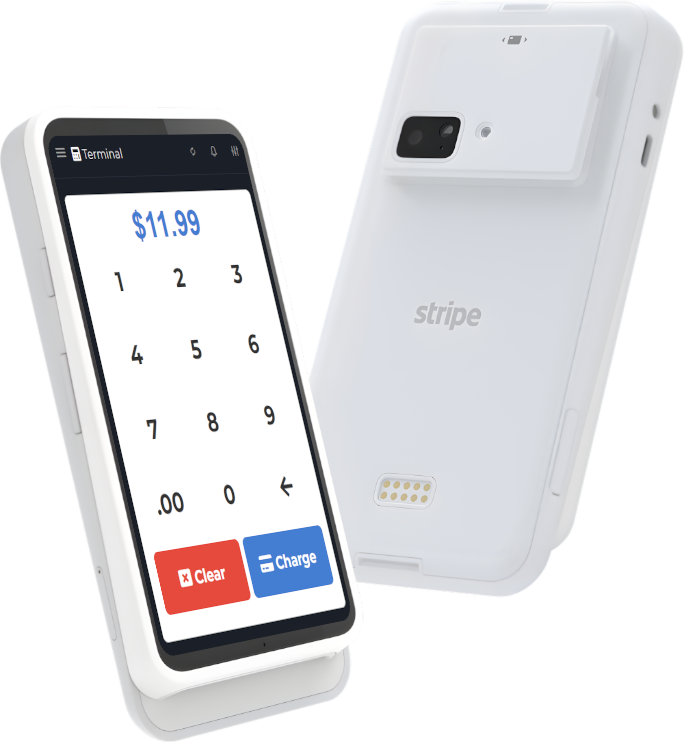
A POS that is easy to keep clean is a strategic advantage. M&M POS is built to help small teams maintain a consistent catalog, run straightforward checkout, and keep reporting usable. When your POS is stable, everything else gets easier: staffing, purchasing, customer service, and yes, safe automation.
If you are rebuilding your workflows and want a practical place to start, download M&M POS and do a simple test: set up your top items, run a few test shifts worth of transactions, and verify you can close out cleanly and find what you need in reports.
Bottom line
If someone promises that "AI" will magically fix a messy operation, be skeptical. The fastest path to real improvement is predictable inputs: a clean catalog, believable counts, a consistent close-out, and clear policies. Once those exist, automation becomes powerful instead of risky.