
Customers are getting better at spotting fake images and misinformation. Learn a simple content pipeline for AI-assisted photos, menu graphics, and ads that protects trust with provenance, approvals, and repeatable rules.
Two things are true at the same time:
- AI-generated images can save small businesses a ridiculous amount of time.
- Customers are getting more skeptical every month.
That tension shows up in real life: a restaurant posts a "new menu" graphic and people ask if it is real. A salon posts a before/after and gets accused of filters. A retail shop posts a product photo that looks too perfect and customers show up expecting something else.
Trust is not a marketing "nice to have." It is an operational asset. It reduces returns. It reduces arguments. It increases repeat business. And it is fragile.
In the AI era, the goal is not to avoid AI. The goal is to use it in a way that is fast and believable.
There is a concept gaining momentum called content provenance: metadata and signals that help people verify where a piece of media came from and whether it was generated or edited with AI. Industry standards like C2PA (Content Credentials) and watermarking approaches are part of that broader push.
You do not need to implement standards yourself to benefit from the mindset. You just need a pipeline that answers one question: Can I stand behind this image if a customer asks about it?
The small-business content pipeline (simple, repeatable, calm)
Step 1: Maintain a "truth library" of real photos
Create a folder of real, current photos you know are accurate:
- your actual storefront
- your actual most popular items
- your actual team (with permission)
- your actual space (lighting matters)
These become the baseline. AI content should be built around these, not instead of them.
Step 2: Decide what AI is allowed to do
Write three categories:
- Allowed: background cleanup, adding text overlays, creating seasonal themed frames, generating abstract graphics for announcements.
- Allowed with review: enhancing lighting, extending a background, removing clutter, stylizing an image.
- Not allowed: inventing menu items you cannot serve, inventing product features you do not have, changing "before/after" results in a misleading way.
This is not moral philosophy. It is risk management. The forbidden category is anything that would create a customer expectation you cannot fulfill.
Step 3: Use AI to create templates, not truths
The highest-leverage use of AI is to produce reusable templates:
- "New item" announcement layout
- "Happy hour" weekly schedule layout
- "Holiday hours" graphic layout
- "Service package" explainer layout
Then you fill those templates with real details (real prices, real items, real dates). That is where speed and trust can coexist.
Step 4: Add a lightweight approval step
Small teams fail here because approvals feel like bureaucracy. The trick is to keep approvals tiny:
- One person owns the brand voice.
- One person owns factual accuracy (prices, dates, ingredients, policies).
- Any AI-generated image that depicts a specific product must be compared to a real photo.
If you do this, you can move fast without publishing something that creates chaos later.
Step 5: Connect marketing content back to your POS reality
The fastest way to lose trust is to advertise something your POS does not support: wrong name, wrong price, wrong availability, wrong options.
As a rule: marketing should be downstream from your POS catalog, not independent from it.
If your menu item is called "Iced Latte (16 oz)" in your POS, your marketing should use the same name. If you sell out, your marketing should not keep pushing it for 3 days because nobody updated the story highlights.
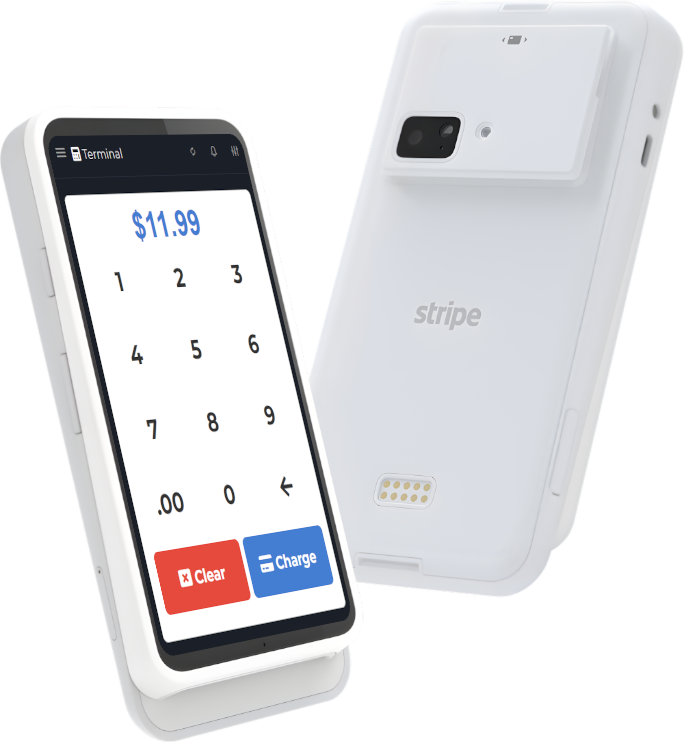
This is where a POS like M&M POS helps. When you treat your POS catalog as the source of truth, your graphics, posts, and signage become consistent. If you want to tighten that loop, download M&M POS, clean up your item names and modifiers, and use that structure as the backbone for everything customers see.
What to say if customers ask, "Is this AI?"
You do not need a long explanation. You need a confident one-liner. For example:
- "We used AI to design the graphic, but the item and price are real."
- "That image is an illustration. Here is a real photo from today."
- "We use AI for layouts, but we do not use it to fake products."
Customers do not hate AI. They hate being misled.
A final operator take
In the next year, provenance signals and verification tools will become more common in the platforms where customers discover you. But you do not have to wait for that ecosystem to mature. You can win now by doing the boring thing: build a content process you can defend.
Speed plus trust is a competitive advantage. Most small businesses will pick one. If you build a simple pipeline, you can keep both.