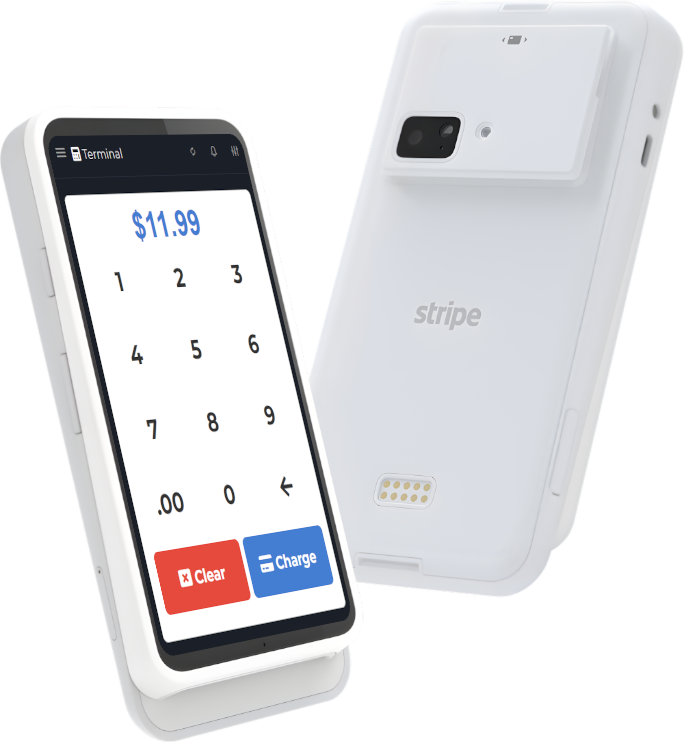


For salons, repair shops, cleaners, contractors, and other service businesses, the smoothest customer experience is one connected flow: booking, estimate, invoice, payment, and tip. Here is a practical workflow you can implement without overcomplicating your day.
Retail and restaurants get most of the POS spotlight, but service businesses are where checkout can get truly weird. One day you are taking a deposit for a future job. The next day you are collecting payment after a repair, adding parts, applying a discount, and trying to capture a tip while the customer is standing there with keys in hand.
\n\nIf you run a salon, barbershop, auto/detail shop, cleaning service, pet grooming business, IT support desk, or any kind of appointment-based operation, you have probably felt the pain of disconnected tools:
\n\n- \n
- booking app does not match your invoicing \n
- invoices do not match what actually happened \n
- payments show up in a different dashboard than your daily sales \n
- tips get tracked inconsistently \n
The good news is you do not need a perfect software stack to fix this. You need a single, repeatable workflow that your staff can follow, and a POS that can represent the work the way customers understand it.
\n\nHere is a practical, operator-focused flow we recommend: Book -> Invoice -> Tap -> Tip. It is simple enough to run daily, but structured enough to scale.
\n\nThe goal: one story, one receipt
\n\nFrom a customer perspective, the entire service should feel like one story:
\n\n- \n
- They booked something. \n
- They received the service. \n
- They paid what they expected (or what was explained). \n
- They got a receipt that matches what happened. \n
When the receipt matches reality, disputes drop. Reviews improve. Staff spend less time explaining. And close-out gets easier.
\n\nStep 1: booking (keep it lightweight, but capture intent)
\n\nYou do not need a complex CRM. You need three things at booking time:
\n\n- \n
- who (name + contact method) \n
- what (service type) \n
- when (date/time) \n
If you do nothing else, make sure the service type is consistent. "Haircut" cannot become "Cut" on one day and "Mens cut" the next. Consistency is what makes reporting useful later.
\n\nStep 2: invoice (build a service catalog like you would a menu)
\n\nA lot of service businesses treat invoices like a blank canvas. That creates chaos. The better approach is to treat services like a menu:
\n\n- \n
- Base services: the core job (oil change, haircut, deep clean) \n
- Modifiers: options that change time/price (long hair, pet hair, premium oil) \n
- Add-ons: extras that are easy to say yes to (conditioning, air freshener, screen protector) \n
- Parts/materials: structured line items, not scribbled notes \n
This is an engineering idea in disguise: a structured catalog reduces the number of ways a transaction can be represented, which reduces errors and makes your data trustworthy.
\n\nStep 3: tap (make payment fast and predictable)
\n\nWhen a service is done, the customer wants closure. The payment flow should be:
\n\n- \n
- confirm the final invoice amount \n
- accept payment with minimal steps \n
- issue a clean receipt immediately \n
Where teams get stuck is letting "exceptions" take over: split payments, partial deposits, or last-minute discounts with no explanation. You can still support those cases, but your default should be smooth and consistent.
\n\nStep 4: tip (capture it in the moment, not as an afterthought)
\n\nTips in service businesses are emotionally delicate. The best tip screens and prompts do two things:
\n\n- \n
- they are quick (no awkward delay) \n
- they are clear (the customer understands what they are tipping for) \n
From an operations standpoint, tips should be tracked consistently so payouts and reporting do not become a weekly argument.
\n\nHow to handle the messy cases (without breaking the workflow)
\n\nDeposits
\n\nIf you take deposits, treat them as their own transaction tied to the customer and service type. Later, apply the deposit as a credit to the final invoice. The point is to keep the receipt trail clean.
\n\nEstimates that change
\n\nService work changes. The rule we like is: changes must become line items. If you add a part, add a part line item. If you add time, add a labor line item. Customers accept changes more readily when the invoice tells a coherent story.
\n\nDiscounts
\n\nDiscounts should have a reason and a consistent format. Avoid the "we just typed a different number" approach. You want future-you to understand what happened when you review reports.
\n\nWhere M&M POS fits in this workflow
\n\nThe fastest way to make this real is to build a structured service catalog and run everything through a POS that keeps receipts consistent and reporting usable.
\n\nWith M&M POS, you can treat services like menu items: build clear base services, add-ons, and modifiers, then ring them up the same way every time. That consistency makes close-out easier and helps you spot which services actually drive profit (not just revenue).
\n\nIf you want to test the workflow before you change anything in production, you can download M&M POS, create a small service catalog (10 to 20 items is enough), and run a week of internal practice transactions to see if the flow matches how your team works.
\n\nA simple implementation plan (one afternoon)
\n\n- \n
- List your top 10 services (what customers buy most often). \n
- Define 5 to 10 common modifiers (what changes price/time). \n
- Create 5 add-ons that are genuinely helpful, not spammy. \n
- Decide your deposit rule (if you use deposits). \n
- Train staff with 3 scenarios: normal service, service with add-ons, and service with a change request. \n
When this workflow clicks, it feels like your business got quieter. Fewer exceptions. Fewer debates. More time spent doing the work instead of managing the paperwork around it.