

New research shows LLMs can silently corrupt documents during long delegated editing workflows. Here’s how small businesses can safely use AI to draft and update SOPs—without letting errors compound over time.
AI assistants are getting good enough that people are starting to delegate real work: ‘Rewrite our opening checklist,’ ‘Update the refund policy,’ ‘Standardize our intake scripts,’ ‘Make this training doc clearer.’
That’s exciting—because good documentation is one of the highest-leverage upgrades a small business can make.
But there’s a catch. New research on long delegated editing workflows suggests that even strong LLMs can introduce sparse but severe errors that silently corrupt documents over time. In other words: the doc looks fine at a glance, but it’s wrong in ways that matter. Those errors compound when you keep asking the assistant to ‘edit the latest version.’
This post is a practical safe-AI-delegation guide for small businesses that want the speed benefits of AI without turning their SOPs into a game of telephone.
The real risk: document drift
When you ask an assistant to update a document repeatedly, small changes accumulate:
- A step gets deleted because it looks redundant.
- A policy threshold changes (for example, $25 becomes $50).
- A timing rule shifts (for example, ‘same day’ becomes ‘within 24 hours’).
- A compliance detail disappears (ID check, consent language, tip distribution note).
In ops, we call that drift. And drift is dangerous because it isn’t obviously wrong—it’s subtly different from what you intended.
Rule 1: SOPs should be versioned like code
Even if you’re not technical, steal the best practice from engineering: don’t treat your SOP as a living blob. Treat it as a series of reviewed versions.
Practical versioning you can do today:
- Date-stamp SOPs (e.g., ‘Refund Policy v2026-05-10’).
- Keep a short changelog at the top (‘what changed and why’).
- Archive old versions instead of overwriting.
Rule 2: Delegate drafting, not authority
Use AI for what it’s great at:
- Turning bullet points into clear language
- Creating checklists
- Suggesting structure
- Generating role-specific scripts (cashier vs manager)
But keep the authority with a human owner. Someone must be accountable for correctness.
Rule 3: Use constraints to prevent accidental policy changes
When you ask the assistant to revise a doc, include constraints like:
- ‘Do not change any numbers, thresholds, prices, or time windows.’
- ‘Do not remove steps; only reorder or clarify.’
- ‘Preserve compliance notes verbatim.’
This is one of those places where being picky pays off.
Rule 4: Add a verification pass (the diff review)
After the AI drafts an update, do a quick verification pass. You don’t need fancy tools—just compare old vs new and look for:
- Removed steps
- Changed numbers
- Changed timing rules
- Changed permission boundaries (who is allowed to do what)
If you want to be extra safe, have a second person do the review. Two minutes of review can prevent months of training confusion.
Rule 5: Tie SOPs to your POS workflow (so they’re not abstract)
SOPs fail when they’re written like textbooks. Tie them to the exact screens and actions your staff will take.
For example:
- Refund SOP should match your actual refund flow (what buttons, what reason codes, what approvals).
- Close-out SOP should match how you run reports and reconcile cash/card.
- Discount SOP should match your promo setup and your ‘who can discount’ rule.
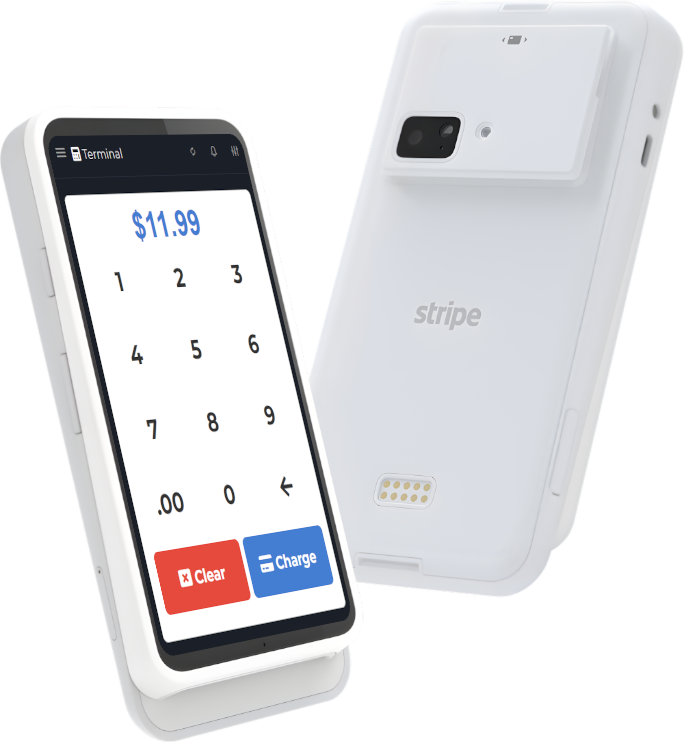
This is where using a consistent POS helps. With M&M POS, you can build SOPs around a workflow that’s designed to be learnable and repeatable. Then you can train staff on ‘do it this way every time,’ which reduces mistakes and makes reporting cleaner.
If you’re setting up processes from scratch, it’s worth installing and rehearsing with your team. You can download M&M POS, run a few test transactions, and write SOP steps that map to exactly what staff will see and do.
A simple AI delegation template you can reuse
Here’s a template prompt you can use internally (edit to fit your situation):
Task: Rewrite this SOP for clarity for a new hire.
Constraints: Do not change any numbers, thresholds, or policy rules. Do not remove steps. Preserve compliance notes verbatim.
Output: A one-page checklist + a short script staff can read aloud to confirm understanding.
Verification: Provide a list of what you changed (wording only) and confirm no rules changed.
That approach keeps you in control, keeps the assistant in its lane, and prevents drift.
AI can absolutely make your team faster—just don’t let it quietly rewrite the rules of your business while you’re not looking.