
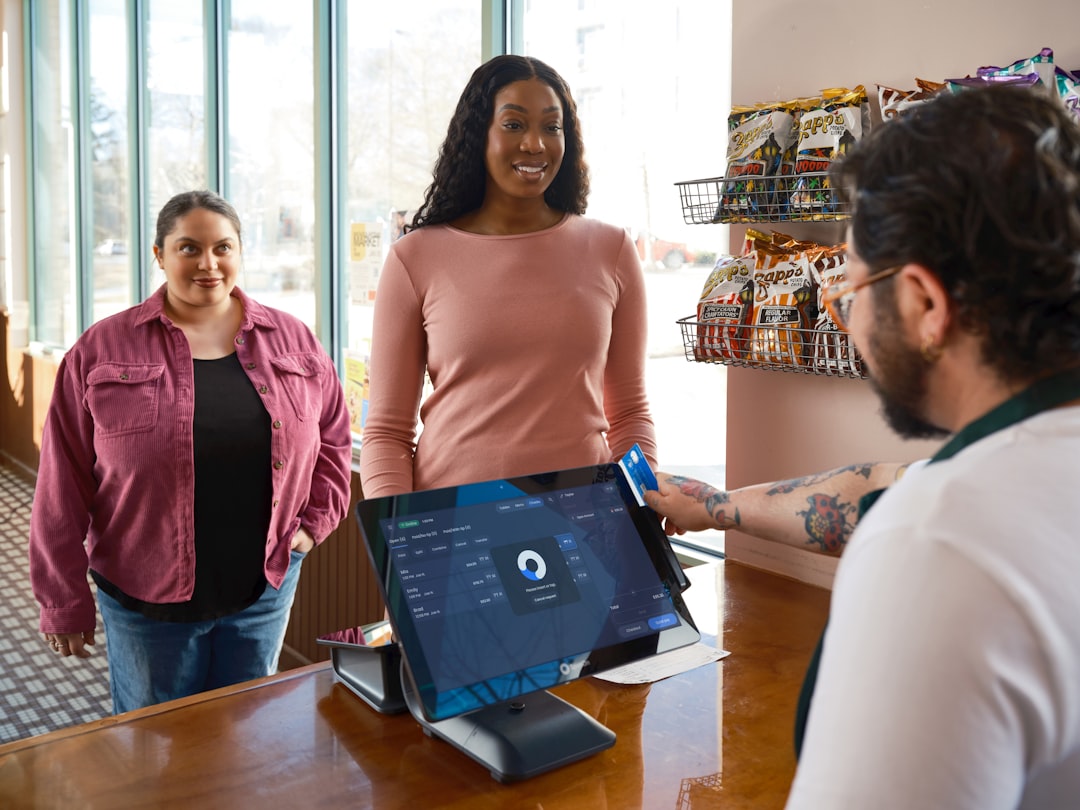
Pickup labels look small, but they can be the difference between one happy guest and a day full of corrected orders.
At 6:15 p.m. the lunch line finally slows down, and the pickup counter gets busy enough for small mistakes to multiply. One bag says 'Taylor' with no note, one says 'Taylor' and has a different phone number, and another has no label at all because someone thought the kitchen tray was clear enough on its own. When a table order sits under a wrong name, one wrong bag becomes a four-minute apology. When the same thing happens twice, the manager starts to lose half a shift to explain, repeat, and retrain.
Small counters are not failing because your team is careless. They fail because pickup details become too spread out. They are in the POS order line, in the note field, on a paper ticket, and in someone's head, all at once. A restaurant team only has one advantage in that chaos: a short routine that keeps the exact right details together.
What the pickup process is really trying to avoid
The pickup moment is usually simple in theory. A guest places an order, staff prepare items, then the guest returns to collect. In practice, the details splinter across three channels before the bag leaves the counter.
The pickup lane usually splits into three parts. First, who ordered it, so duplicated names do not create confusion. Second, what was ordered, including modifiers and add-ons, so substitutions do not get missed. Third, who paid it, so cash and card exceptions are clear before handoff.
When these three lanes are not tied together, your team starts solving the same issue from scratch each time. The pickup counter then becomes a loop of: look, ask, pause, correct, apologize, and repeat.
A label check is more useful than a longer training session
Instead of adding a big new rulebook, test a 5 minute label check that happens before and during the first pickup wave. It is not a paperwork exercise. It is a speed tool.
1) One line in one order field
Choose one note field in the POS and keep it mandatory for every pickup order:
- Customer first name plus last name initial
- Pickup time window such as 6:30 or 7:15
- Bag count, with split bag flags like bag A and bag B
- One short modifier note, like extra salsa or no onions
Keep each note short. Example: "T. Lee, 6:30 PM, 2 bags, sauce side no cheese, split bill". You do not need six lines, one line works.
2) Match the label to the shelf in the same order you hand it off
Most operators discover this late, usually after one missed bag call. Do not print or write labels one person at a time while the other is still packing. Build one rhythm:
- Order entered in POS.
- Label written with the full customer short tag.
- Bag built and tagged.
- POS note and shelf entry done together before the runner leaves.
This sounds repetitive. It is repetitive on purpose. The routine saves the team from deciding who owns what at pickup time.
3) Add a short shelf glance and a correction rule
Every 15 to 20 minutes while pickup demand is high, two people do a 90-second shelf glance. They are not re-packing everything. They are checking that each label and note still aligns.
Use this quick correction rule if it does not align:
- If one name is unclear, pause the bag before handoff and confirm the exact note text.
- If modifiers do not match the order, re-open the POS line and verify before the guest arrives.
- If bag count differs, fix the shelf before the next announcement.
That one scan prevents the worst kind of error: the guest leaves with a right bag for the wrong person.
How this helps customers, even with common chaos
The scene happens everywhere: duplicate names, substitutions, split orders, and late pickups. The point is not to avoid all mistakes, only to stop big mistakes.
Take a Saturday with three guests named Kai. One Kai ordered spicy chicken with extra napkins. One ordered spicy chicken with no napkins. One orders a separate drink and says it should be held. A single shared line can handle all three if the bag labels include a second detail, a short modifier, and the right window.
This is not theory. It is operational memory. Your team remembers the line at closing with less stress when each bag is already connected to a note. The note itself becomes a backup memory for the manager.
A concrete mini-routine for one shift
Here is a short rhythm for a lunch rush that lasts two hours:
- Before rush starts, staff review all existing pickup tickets and add missing initials for each name.
- During peak, one team member labels and confirms, the second confirms modifiers and bag count.
- After 20 minutes, the runner and server do a shelf glance and correct any mismatch.
- Close to end of rush, the lead records unresolved pickups as a short exception list.
That list should be short. It can include only two fields: "order" and "what changed". You will fix the right issues before the counter closes.
This small loop also protects returns. A customer who calls asking why their order is short usually does not want a fight. They want to know if their bag has the bag they were promised. When you can say "We labeled it with one sauce note and two modifiers at 6:42, and here is what changed at 6:49" you avoid back-and-forth and get to righting the issue fast.
Use notes without turning everyone into data entry staff
Teams get resistant when they feel you are adding another admin tax. Set limits before the shift starts:
- One line per pickup order in the POS.
- One short shelf label with first name and bag count.
- One shelf check every 20 minutes.
That is not too much to hold in real traffic. It is easier than chasing mixed names by the phone every 15 minutes.
Why this is cheaper than a software upgrade
A lot of teams ask if this means a bigger change in their POS setup. Usually not. This is a process layer on top of what already exists. It gives your current checkout flow one clear standard language: bag labels and one-line notes must match before handoff.
If the team starts to drift, do not rewrite everything. Revisit the rhythm and shorten it. If two steps take too long, remove the least useful one, not the whole check.
The same bag can pass from station to station without confusion when the POS note, shelf label, and guest name all agree, and the staff knows exactly who checks that agreement.
Simple training script for new staff
A new teammate should learn three questions in the first week, not ten. Ask these: can you read the name and window from this label, can you point to the matching note, and can you check bag count in one pass?
If they can do all three in one minute, they can hand off without waiting on a manager. If not, pair with a senior staffer for one shift and keep practicing.
A final practical check before closing
After last pickup is collected, keep a 90-second review. Confirm no notes remain unlabeled, and no label has an unclear name. If one bag was disputed, update the note with a short tag so the next team member can spot the pattern. This keeps mistakes from disappearing into the night and returning the next day.
If you want to build this into your own workflow quickly, the simplest start is to test it with one counter for one day and copy the same steps for the next counter on Monday. Then compare how many pickup call-backs changed. Most teams see cleaner handoffs in two or three days. You do not need a perfect process on day one, just one repeatable method that matches your busiest time.
Need a place to begin with fewer moving parts? You can always download M&M POS, set up the pickup tag flow for one counter, and test it this week. When labels, notes, and handoffs match, guests leave faster and your staff stops explaining the same bag story twice.
If this kind of checkout routine would help your shop, you can download M&M POS and test it with your own setup.