
A practical, non-hype framework for choosing discounts, targeting the right customers, and measuring results using the data you already have in your POS.
Most small businesses don’t have a “pricing team.” They have a busy owner, a few managers, and a constant stream of decisions: Should we run a discount? How big? For how long? Will it help… or just train people to wait for sales?
We’ve seen the pattern again and again: promotions fail when they’re chosen by vibe. Promotions work when they’re treated like a simple experiment with guardrails.
This guide is built for real life. No advanced math. No fake certainty. Just a clear way to plan a promotion, pick the offer, and measure it using your POS data.
Step 1: Decide what problem you’re solving (not what discount you like)
Discounts are tools. Start by naming the job you want the tool to do:
- Traffic problem: slow days/hours, seasonal dip.
- Conversion problem: people browse but don’t buy.
- Basket size problem: customers buy one item when you need two or three.
- Repeat problem: customers try you once and disappear.
- Inventory problem: aging stock or over-ordered ingredients.
Different problems need different offers. “10% off everything” is usually a blunt instrument.
Step 2: Pick the promotion type that matches the problem
Here are promotion types that tend to work well for small businesses because they’re easy to understand and measure.
For traffic: time-boxed, daypart offers
Example: “Happy hour pricing 2–4pm” or “Tuesday lunch special.”
Why it works: you’re not discounting your busiest hours. You’re filling dead zones.
For conversion: first-time customer offers (with a clear boundary)
Example: “$5 off your first purchase over $25.”
Why it works: you’re paying to acquire a new customer, not discounting loyal customers who would buy anyway.
For basket size: bundles and thresholds
Examples:
- “Buy 2, get 1 half off”
- “Free add-on with any entree”
- “Spend $50, get $10 off”
Why it works: you’re shaping behavior (bigger baskets) instead of just lowering prices.
For inventory: targeted markdowns (not storewide sales)
Example: “20% off select seasonal items” or “end-of-week pastry pack.”
Why it works: you protect your margin on items that sell at full price.
Step 3: Use your POS data to choose the discount size
This is where people overcomplicate things. You don’t need a perfect model. You need a safe starting point.
A simple margin safety check
Ask two questions:
- What’s the typical margin on the items involved? (Even a rough estimate helps.)
- What behavior change do we need? More units per order? More orders per day? More first-time customers?
If your margins are tight, prefer offers that increase basket size (bundles, thresholds) rather than blanket % discounts.
Start smaller than you think
In practice, the “best” discount is often the smallest discount that changes behavior. If you jump to a huge offer on day one, you’ll never know whether a smaller offer would have worked—and you’ll have a harder time rolling it back later.
Step 4: Define success before you launch
Pick 2–3 metrics you’ll actually check. Examples:
- Orders during the target time window (not all-day totals)
- Average basket size (units and dollars)
- Gross margin dollars (even estimated)
- Repeat rate for customers who used the promo
Engineering perspective: your “definition of done” matters. If you don’t define success upfront, you’ll judge the promo on feelings and anecdotes.
Step 5: Run promotions like experiments (with guardrails)
Here’s a clean, repeatable cadence:
- Duration: 7–14 days (long enough to see a pattern, short enough to stop)
- Scope: one problem, one offer type
- Guardrail: a maximum discount budget or margin floor
- Review: check results at day 3 and day 7
If it’s working, extend it. If it’s not, stop and try a different lever. That’s not failure—that’s how you avoid bleeding money on “marketing” that doesn’t pay back.
Where a POS helps (and where it doesn’t)
Your POS won’t magically make a bad offer good. But it will make a good offer measurable.
A POS setup that supports promotions well should give you:
- Clean item-level sales data
- Clear receipts and discount line items (so customers trust the charge)
- Easy reporting by day/time/category
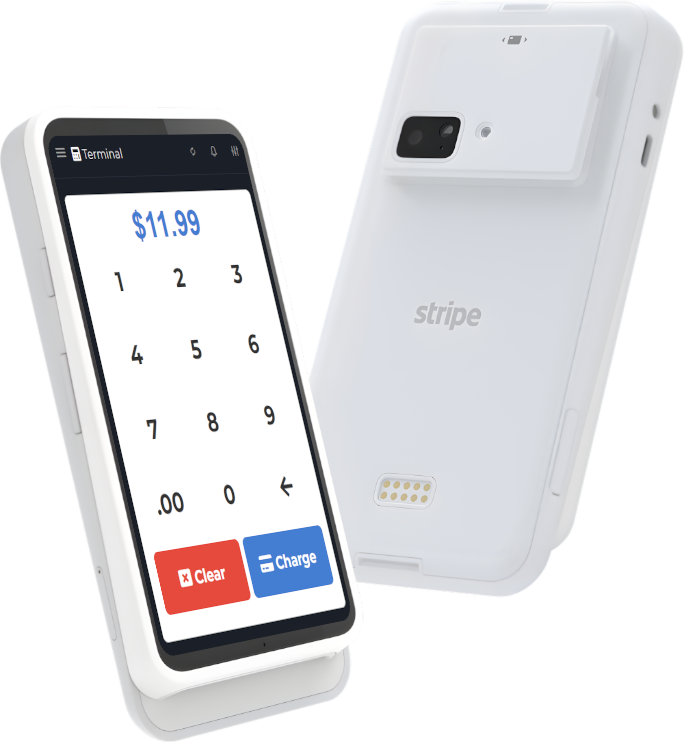
If you’re building or refreshing your workflow, M&M POS is a solid starting point for keeping checkout fast while still capturing the data you need to run smarter promotions. Once you’re ready, you can download M&M POS and standardize items, categories, and discount behavior so every promotion teaches you something.
A quick example: a promotion that protects margin
Let’s say you run a cafe and afternoons are slow. Instead of “15% off everything,” you run:
- “Free cookie with any latte 2–4pm”
Why it’s better:
- It increases perceived value without discounting your entire menu.
- It nudges a higher-margin anchor item (the latte).
- It’s easy to explain and easy to track.
Takeaway
Promotions don’t have to be chaotic. When you pick the problem first, choose the right offer type, and measure a handful of metrics, you’ll stop guessing—and you’ll stop accidentally training your best customers to wait for discounts.
Make one promotion a month “scientific,” and your business will compound the learning fast.