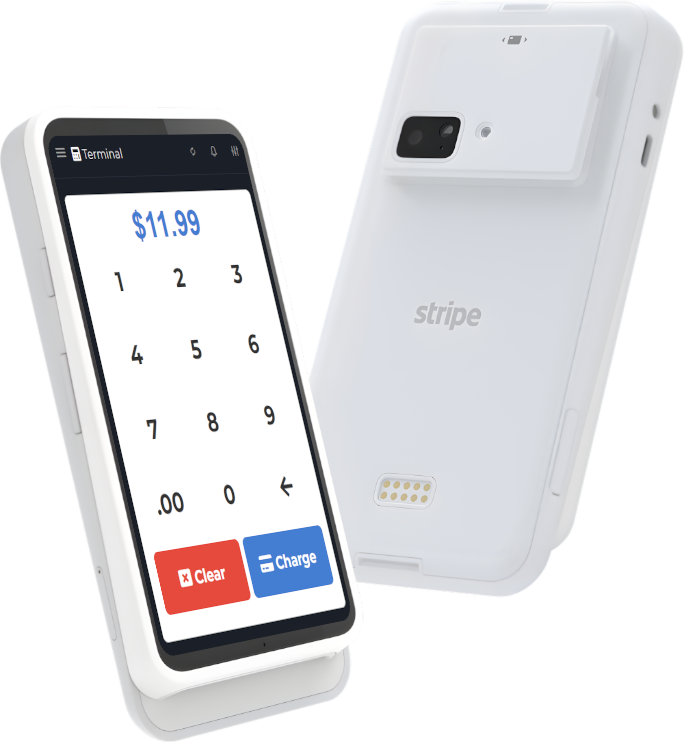


Pay-by-bank is moving from online checkout into everyday in-person payments. Here is what real-time rails mean for fees, refunds, chargebacks, and POS operations.
Payments are getting weird (in a good way)
For years, the choices at the counter were basically: cash, card, and maybe a local wallet option. Now there is a new family of payment methods showing up everywhere: pay-by-bank (sometimes powered by open banking) and real-time payments (RTP-style rails where funds move quickly and confirmation is immediate).
If you run a retail shop, restaurant, or service business, you do not need to become a payments engineer. But you do need to understand the operational differences, because this stuff affects how you reconcile, how you handle refunds, and how you keep your team from making expensive mistakes.
What is "pay-by-bank" in plain English?
Pay-by-bank usually means the customer authorizes a payment directly from their bank account, without a card number being the core credential. The experience can look like:
- a bank selection screen on the customer phone
- a QR code the customer scans at checkout
- a wallet-style button that routes through their bank
From your perspective, it is a digital payment that can be cheaper than cards, can confirm fast, and often has different dispute rules than card chargebacks.
What changes at the counter?
In a POS, the risk is not "can we accept the payment". The risk is that your store processes it like a card payment when it behaves differently. Here are the differences that matter:
1) Confirmation vs settlement
Real-time rails typically confirm quickly. That does not always mean the money is irrevocably yours forever, but it does mean your POS should record a payment confirmation ID and treat it as a first-class receipt artifact.
POS implication: your receipt and transaction history should include the payment method type and a reference token. When a customer calls later, your staff needs to find the exact transaction in seconds.
2) Refund handling is not always symmetrical
Card refunds are familiar: you refund to the same card, it can take a few days, and the customer recognizes it. Bank-based methods may have different refund flows:
- some support instant refunds
- some require a new bank authorization
- some treat refunds as a separate outbound payment
POS implication: build a refund UI that guides staff through the correct flow based on the payment type. Do not rely on a single "Refund" button that assumes every payment behaves like Visa/Mastercard.
3) Disputes look different
Card chargebacks are a whole world. Bank-to-bank disputes can exist too, but the timelines, evidence, and outcomes can differ. The best protection is operational: clean receipts, clean itemization, and fast retrieval of proof.
POS implication: keep structured data. Item names, quantities, tax, tip, and notes should be stored in a way you can export quickly. Even when disputes are rarer, the one dispute you get is where your process either saves you or costs you time.
A practical rollout plan (no heroics required)
This is the plan our team recommends when a business wants to add new payment methods without breaking the day-to-day flow.
Step 1: Add the method, but start with one register
Pick a single checkout station (or a single staff device) as the pilot. The goal is to observe edge cases: split tender, partial refunds, tips, and voids.
Step 2: Update your "refund decision tree"
Write a tiny internal doc for staff:
- What counts as a refund vs a void?
- When do we require manager approval?
- How do we handle "I paid the wrong amount"?
Make it payment-method-aware. You want staff doing the right thing automatically.
Step 3: Tune reconciliation
At minimum, your close-out should answer:
- Total sales by payment method
- Total refunds by payment method
- Net deposits expected
If your POS can label and summarize payment methods cleanly, you will avoid "mystery gaps" later.
Where M&M POS fits
The easiest way to adapt to new payment trends is to run a POS that keeps your transaction data clean: itemized receipts, clear payment method labels, and a back office view that makes reconciliation and refunds straightforward.
If you are evaluating modern POS workflows (or you just want a simpler daily close), start with M&M POS. You can also download M&M POS and test your checkout flow with real-world scenarios before you change anything in production.
Quick checklist you can copy into your ops binder
- Do we capture a payment reference token on the receipt?
- Can staff find a transaction by customer name/phone/email and by receipt number?
- Do refunds follow method-specific rules (not one generic flow)?
- Does the end-of-day report break down sales/refunds by method?
- Do we have a one-register pilot plan before full rollout?