

Design a practical AI-enabled checkout workflow that keeps payment flow fast, reliable, and fully operator-controlled.
Small businesses are evaluating AI in checkout operations because pressure points are clear: rising order volume, staff fatigue, and a mix of payment expectations. AI can help, but only if teams are clear about the guardrails first. A store that lets AI run operations without defined control loops usually ends up with more rework, not less. Start with this question: what part of checkout should AI suggest, and what part should a person always approve?
Define AI in checkout as a helper, not a decision owner
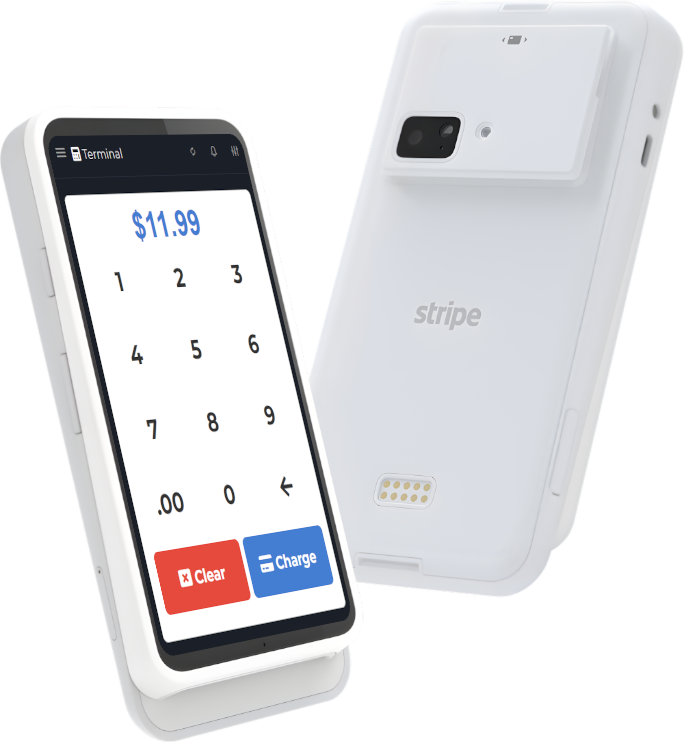
At checkout, humans still own the customer interaction, policy exceptions, and final money authorization. AI can support by handling repeated patterns: product lookup prompts, quick rule checks, recommended upsell wording, and payment issue triage. This split keeps AI useful without hiding accountability. A safe model is to let AI draft a suggestion while the cashier or supervisor confirms any action that can affect revenue, tax, or customer credit terms.
Use this practical policy in staff onboarding: AI suggestions are optional; every override must be traceable. If a terminal shows "suggested action," staff confirm with a tap and continue. If AI confidence is low, force manual flow. This prevents trust in a system before it proves stable in your lane flow.
Start with a simple transaction map before any model rollout
Map your top 20 transaction scenarios. Include normal sale, mixed tender, coupon conflicts, returns, and card network failures. For each, write a manual path and a fallback path. The map should include who can fix what, and what data must be captured.
- Normal sale: scan product, verify discounts, take payment, print/notify receipt.
- Price discrepancy: show rule check, verify stock cost, request manager review.
- Failed card: switch method, retry timing, collect alternate payment.
- Offline mode: queue and sync rules for back office reconciliation.
- Fraud-risk pattern: hold and escalate with evidence from POS event log.
This map becomes your boundary set. AI can assist with routing and recommendations, but no automation should bypass escalation rules.
Use AI for low-risk repetition first
Choose low-risk routines in this order:
1) Suggestive actions. AI can propose the most likely next step from the open screen, such as "open coupon selector" or "apply existing customer discount". This reduces training load for new operators and speeds repetitive actions.
2) Payment issue coaching. AI can help staff read terminal errors quickly and suggest specific fixes. A cashier seeing "declined" can receive a concise sequence: retry after clearing cache, try alternate wallet, or ask for card-present retry based on your rules.
3) Shift handoff notes. AI can summarize open tabs, pending captures, and cash variance to reduce forgotten tasks. This is useful for store managers who handle closeout handoffs between shifts.
Create three fail-safe layers
Any AI checkout deployment needs clear fail-safes:
- Data safety layer: limit PII exposure in prompts and logs. Never include full card details in model context.
- Action layer: block any AI path that could auto-issue refunds, voids, or discounts without approval.
- Audit layer: write every AI suggestion and final human choice to an operations log for weekly review.
These layers align with practical reliability goals. If a recommendation is wrong, staff should be able to continue checkout with minimal delay and restore control quickly.
Design the payment stage for AI-aware exceptions
Payment is where AI mistakes hurt most. Keep a small set of deterministic checks in POS itself:
- Validate amount ranges before applying split tenders.
- Verify order has not already been captured when retrying a payment.
- Require confirmation when method changes would alter sales attribution.
- Force receipt method confirmation on large offline captures.
When these checks exist, AI can still suggest actions but cannot create silent drift.
Set measurable guardrails and tune by lane, not by marketing pitch
Use operational KPIs that matter in your store: line wait time by hour, override count per shift, and exception recovery time. If AI advice is sound but no one follows it, your onboarding failed. If staff override too much, instructions may be too rigid or too unclear. Review by lane type.
For each lane, compare three periods: before rollout, first week, and third week. Track:
- Average checkout completion seconds
- Manual help tickets linked to checkout flow
- Manager interventions for incorrect suggestions
When metrics improve without trust erosion, you can expand one more automation step.
Common failure patterns and how to avoid them
Teams often fail in these areas:
- Using AI for pricing policies without policy governance.
- Assuming all operators will trust the same suggestion style.
- Building too many prompts and too few real-world checklists.
- Publishing custom prompts publicly without legal review.
Each issue is solvable by shrinking scope and making decision ownership explicit.
From pilot to rollout with M&M POS
For a practical pilot, use one register and one shift. Add one AI use case at a time, run daily after-action notes, and expand only when outcomes are stable for a full week. This is where the system matures from a demo concept into a daily worker. When your team needs speed, consistency, and fewer exceptions, start by adding the AI layer in one lane, then replicate to others.
If your business wants the same disciplined approach without waiting for heavy build work, download M&M POS to test workflows with your team. AI tools are strongest when paired with a repeatable checkout process and clear human escalation rules.
Deployment checklist for small teams
- Pick one high-volume transaction type and write the manual and fallback path.
- Define who can approve AI-recommended exceptions.
- Store AI suggestions in a reviewable log.
- Run weekly QA on payment failures and void-related incidents.
- Train new staff on how to accept, reject, or correct suggestions.
- Keep the fallback flow simple so service never depends on AI uptime.
Operators do not buy AI speed alone. They buy consistency, fewer errors, and fewer stressful moments at close. A controlled rollout keeps those outcomes in reach.
Extended AI rollout quality loop
When AI suggestions are stable, teams often ask for one more automation step. Add only one controlled increase at a time, then run an explicit review. Review week one against week four using three scorecards. Scorecard A is speed, scorecard B is exception quality, and scorecard C is employee confidence. If any scorecard slips, freeze expansion and fix the root process.
Use this weekly scorecard pattern.
- Collect logs from all lanes and group exceptions by type.
- Label each exception as data issue, network issue, rule issue, or staff bypass.
- Run a one-hour review with staff and remove one confusing suggestion before adding any new suggestion.
This pattern protects trust. If staff know that corrections are expected and tracked, they are less likely to bypass the system entirely.
For every new AI suggestion, keep one fallback phrase for the operator, such as manual price check, confirm customer method, or escalate to lead. Over time, this creates a shared operational language that reduces hesitation at the counter.